Here at Perth Zoo, we're the only place in the world breeding Numbats for release back into the wild.
For more than three decades, our experts have carefully honed the breeding cycle to ensure its continued success.
Within the Zoo's Numbat breeding facility, the animals are provided a naturalistic environment and a species-specific termite diet that closely mimics what they would have in the wild - setting them up for the best chance for life beyond our Zoo gates.
Since 1993, more than 320 Zoo-born Numbats have been released into the wild, helping to grow populations from an estimated 300 to now more than 2000.
Just this year, the Numbat was officially downlisted from officially been downlisted from Endangered to Near Threatened on the International Union for Conservation of Nature’s (ICUN) Red List!
IUCN's Red List credits the establishment of at least five more self-sustaining populations to successful Zoo-bred and released animals and wild translocations.
Perth Zoo's Senior Keeper Vicki Power has been on this journey every step of the way. And as the Species Coordinator for Numbats, she plays a leading role in making this breeding program the success it is today!
Numbat breeding timeline
January - Matings occur and most young are born in late January. The joeys start life looking like tiny pink jelly beans.
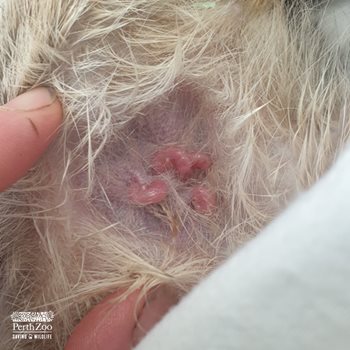 February
- Males are separated from females. Females are checked, and if joeys are present the mothers are weighed.
March - Mothers have an 8-week weigh-in.
April - Joeys grow but are still only slightly larger than a jellybean. Each joey attaches to a teat and is hidden by the mother's belly hair and skin folds.
May/June - Young grow and are visible hanging from their mother's teats.
July - Young are too big for mother to hold and are deposited into a safe underground chamber.
August/September - Numbats start to become independent and may emerge from the burrow. They learn to eat termites.
October - Young are weaned away from mother and separated from each other.
November - Young are prepared for wild release with radio collars. Additional termite mounds are brought in for them to forage on.
Early December - Numbat joeys are released!
Late December Breeding pairs are matched and the cycle starts all over again!